


Tips for your ocular health
By Katelin Moquin
Copy Editor
Oh, be careful little eyes what you see
Oh, be careful little eyes what you see
For the Father up above is looking down in love
Oh, be careful little eyes what you see.
That nostalgic Sunday school rhyme stings, doesn’t it? There is big law in that little verse. God is watching. When eyes go astray, He knows.
But with the Father, there is forgiveness. It is important to see the brief flash of gospel: “The Father up above is looking down in love.” In love. Sinful humans do not always look in love, but the good Father does. He always looks in love because of the forgiving, death-defying work of His Son, Jesus Christ. God the Father looks at His people in love.
This article is not about the omniscience of God (though that would be a great article!). Rather, the Sunday school rhyme is a reminder that sight matters. This article highlights the God-given gift of eyesight. When eyesight works the way God intended, it colors the world and connects people. Taking good care of one’s eyes is faithful stewardship of God’s craftsmanship.
According to the American Optometric Association’s website, age- related vision changes begin around age 40 and include: “The need for more light,” “Difficulty reading and doing close work,” “Problems with glare,” “Changes in color perception,” and “Reduced tear production.”
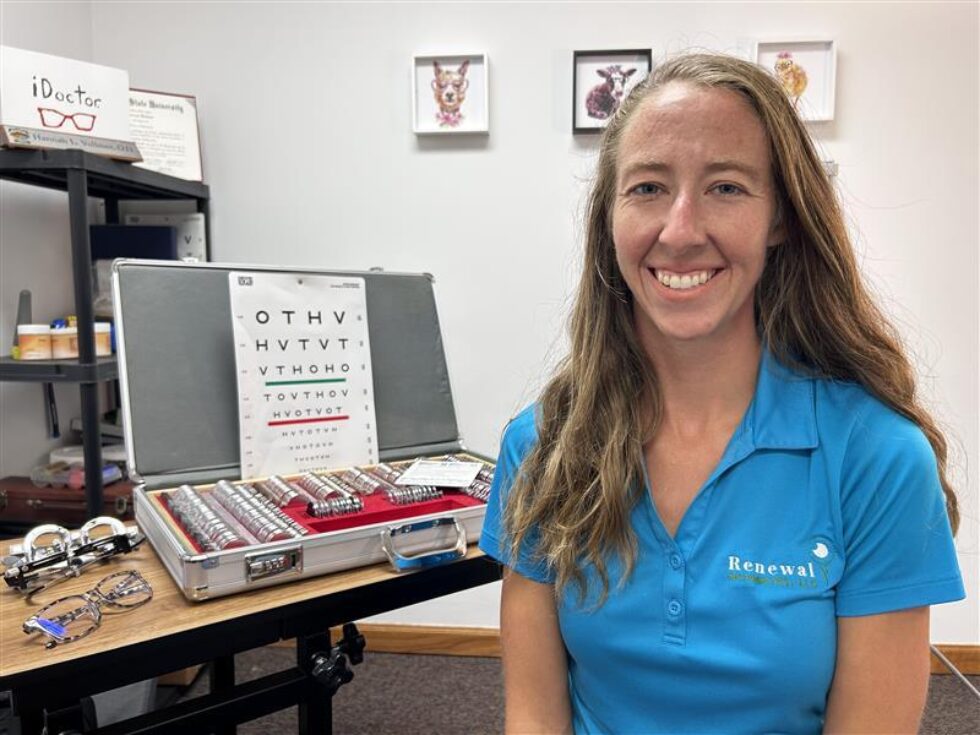
Dr. Hannah Vollmer is an optometrist with experience working at various healthcare facilities for older adults. Fun fact: She is also an organist, choir director, and custodian at her LCMS church in Ohio.
She lists the primary ocular diseases of older age:
Cataracts: clouding of the natural lens of the eye.
Glaucoma: a condition that causes damage to the optic nerve and can cause progressive, peripheral vision loss.
Macular degeneration (AMD): a condition that causes central vision loss through damage to the macula.
The inevitability of age-related vision changes and the increased likelihood of ocular diseases may feel daunting to older adults.
“There are, what medical professionals refer to as, ‘modifiable risk factors.’ In other words, there are things that individuals can do to reduce their risk for ocular complications, despite their genetic or demographic profiles,” Dr. Vollmer said.
Dr. Vollmer offers the following advice for better ocular health as years advance:
Wear sunglasses: Ultraviolet radiation creates oxidative stress which, over time, can worsen cataracts and macular degeneration (AMD).
Eat a healthy diet: Diabetes and hypertension are two systemic diseases that can cause irreversible retinal damage. A healthy diet, specifically one including lots of leafy greens, fish, healthy fats, and few dairy or red meat products, like the Mediterranean diet, may be beneficial for managing blood sugar and blood pressure, and has been shown in several studies to both reduce the risk of AMD and prevent progression in those already diagnosed.
Don’t smoke: Smoking is the number one modifiable risk factor for AMD. Smoking has been shown to increase the risk of developing AMD by 4 times, cause AMD to show up 5 to 10 years earlier, accelerate the progression of AMD, and limit the effectiveness of AMD treatments. The effects of smoking aren’t limited to the macula, though. Smoking also causes cataracts to form earlier and raises the risk of glaucoma by increasing intraocular pressure.
Exercise regularly: Several recent studies have pointed to exercise as a modifiable risk factor for both glaucoma and AMD—lowering intraocular pressure in glaucomatous patients and potentially preventing excessive blood vessel growth in those with AMD. Try getting 150 minutes of exercise a week. If that seems like a lot, don’t be afraid to start small. Any exercise helps.
Visit an eye doctor: Don’t wait to notice a vision problem. Many ocular conditions are insidious—they come on slowly. Patients cannot perceive increased ocular pressure in glaucoma or early pigment changes in AMD. Visit an eye doctor at least once a year for a comprehensive eye exam.
For older adults who may face multiple health challenges, eye health can feel low on the list of importance. But oh, be careful. Those little eyes are a big gift from God.
Consider eyesight just as the Father would—in love.
Pictured above: Dr. Hannah Vollmer is an optometrist in Ohio with experience working at various healthcare facilities for older adults.