


By Thomas Moll
Director of Content & Innovation
When Martin Luther nailed his 95 Theses to the Wittenberg Castle Church door on October 31, 1517, he couldn’t have imagined that Johannes Gutenberg’s printing press would carry his words across Europe within months. The Reformation coincided with a communications revolution that God used to advance His kingdom.
From Gutenberg’s movable type to today’s digital streaming, each technological leap has transformed how we share the Gospel. The printing press mass produced Scripture, putting God’s Word directly into believers’ hands. Radio brought church services into homes during the 1920s, while television in the 1950s allowed congregations to see their pastors and experience worship visually.
The evolution of video technology has been particularly transformative for this ministry. In 1964, Rev. Oswald Henry Bertram embodied this vision when he approached WSPD-TV in Toledo, Ohio, with a bold idea: using television to reach shut-ins with Christ’s love. His program, “Worship for Shut-Ins,” first aired in 1965 using the bulky television cameras and expensive equipment that limited religious broadcasting to visionary pioneers like Bertram.
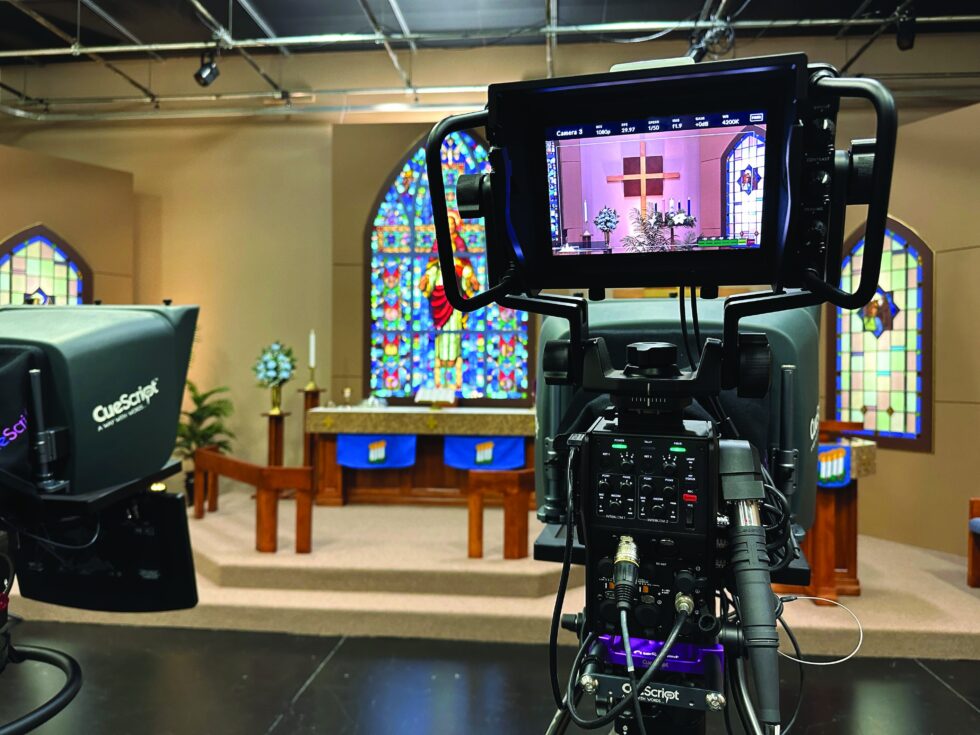
The internet revolution of the 2000s created unprecedented opportunities, and in 2010, the ministry achieved a milestone with a state-of-the-art media center on Concordia Theological Seminary’s campus. This facility expanded the reach of the program to thousands worldwide.
Today’s smartphones contain video capabilities that surpass professional equipment from just decades ago. High-definition recording, instant editing, and immediate global distribution are literally at our fingertips, and because of this, Worship Anew was able to expand its offerings to provide video and written content on mobile apps and smart televisions.
Each advancement—from Luther’s pamphlets to today’s global streaming—reminds us that the message remains constant while the methods evolve.
Worship Anew continues to faithfully share God’s unchanging Word. We rest on the assurance of Isaiah 55:11, which reminds us that God’s Word will not return empty but will accomplish His purpose.